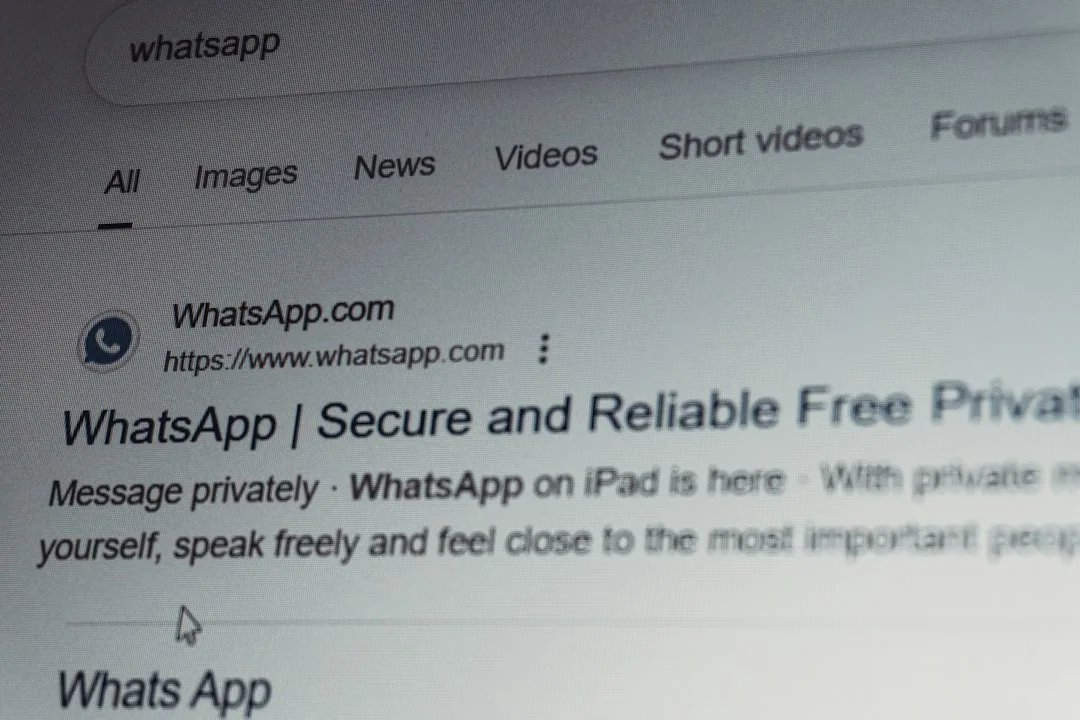
When you search for something on Google, each result usually appears with a title and a short descriptive text. This snippet may come from the SEO meta description set on the page, or be generated directly by Google from the content.
Although a good meta description does not guarantee better rankings, it can help explain what users will find when they click and make a result more appealing than its competitors.
At Ventia Group, SEO experts in Barcelona providing search engine optimisation services for businesses across Spain, we work on meta descriptions as part of a wider on-page strategy: search intent, title, content, structure and conversion.
What is an SEO meta description?
A meta description is an HTML tag that provides a summary of a page.
How it appears in the code
Its usual structure is:
<meta name="description" content="Page description.">
Is it always the text shown on Google?
No.
Google generates snippets primarily from the content of the page itself and may use the meta description when it considers it to describe the URL better for a particular search.
That is why the same page may display different snippets depending on what the user searches for.
Meta description and snippet: what is the difference?
They are not exactly the same thing.
Meta description
This is the text we set in the HTML or through the CMS.
Snippet
This is the descriptive fragment that Google ultimately decides to show in the results.
It may use our meta description or extract other text from the page.
Does a meta description help you rank on Google?
We should not view it as a tool for improving rankings simply by adding keywords.
Its main SEO function is to help present the result better to the user.
It can improve your ability to earn clicks
A description that clearly addresses search intent can make a result seem more relevant and appealing.
For example, compare:
Generic description:
“We are an SEO company. We offer services for businesses.”
Well-crafted description:
“Is your website not bringing in customers from Google? We design SEO strategies for businesses in Barcelona and across Spain. Request an analysis.”
The second explains the problem, solution, service and location.
Are your meta descriptions not generating the clicks you expect? At Ventia Group, we audit your website and optimise every SEO element so Google — and your customers — choose you.
How many characters should a meta description have?
This is one of the biggest SEO myths.
Google does not set an official limit of 155 or 160 characters for the meta description tag.
Google states that there is no technical length limit, although the snippet may be truncated when necessary to fit the available width on the device.
So, what length do we recommend?
As a practical guideline, we can aim for a concise description, generally around 140–160 characters, as long as it communicates the message properly.
However, this should be understood as a writing and display recommendation, not a Google rule.
Prioritise the key message
It is advisable to include the following at the beginning:
- The main intent.
- The benefit.
- The service or content.
This way, even if Google truncates the snippet, the essential information will still be visible.
How to write a good meta description
1. Address search intent
Before writing it, we need to know what the user expects to find.
We would not use the same approach for:
- An informative article.
- A service page.
- An e-commerce category.
- A local page.
2. Clearly explain what the user will find
We do not need corporate phrases such as:
“We are leaders in delivering innovative, high-quality solutions”.
It is better to say exactly what we offer.
3. Use the keyword naturally
We can include the main keyword when it fits naturally.
Not because repeating it will directly improve rankings, but because it helps users quickly identify the relationship between their search and our result.
4. Add a benefit
For example:
- Find out how to do it.
- Compare the options.
- Request a quote.
- Discuss your case.
- Learn step by step.
5. Avoid duplicating it across multiple pages
Each important URL should have a description related to its content and specific intent.
Examples of SEO meta descriptions
SEO agency
Bad:
“We are an SEO agency with many years of experience. Contact us.”
Better:
“Is your business not appearing on Google? We design SEO strategies in Barcelona and for businesses across Spain. We analyse your website and competitors.”
Lawyer
Bad:
“We are a professional law firm offering high-quality legal services.”
Better:
“Do you need a financial criminal lawyer in Madrid? We assess corporate crime, fraud and breach of fiduciary duty. Discuss your case.”
E-commerce
Bad:
“Buy our products online at the best price.”
Better:
“Discover running shoes for training and competition. Compare models, sizes and features to find the right pair for you.”
Why Google may change your meta description
This is completely normal.
Google explains that its snippets are generated primarily from the content of the page.
The user's search is different
A page can rank for hundreds of queries.
A single description is unlikely to be the best answer for all of them.
Google finds a more relevant fragment
It may select a sentence from our content that better answers the specific query.
The meta description is too generic
Texts such as “Discover our services and contact us” provide very little information.
The more specific and descriptive it is, the more useful it will be for users and search engines.
A well-written meta description can make the difference between appearing on Google and getting real visits. Tell us about your website and we will tell you what to improve.
What happens if I do not add a meta description?
Google can generate the snippet using content from the page itself.
That does not necessarily mean there will be an SEO issue.
When is it worth writing one manually?
We would particularly prioritise:
- Homepage.
- Service pages.
- Commercial landing pages.
- Important categories.
- Articles with high traffic.
It can be automated on very large websites
Google recognises that on sites with thousands of pages, it may be reasonable to generate descriptions programmatically using information specific to each page.
This is especially useful for large e-commerce sites, directories or databases.
How to optimise the meta description in Yoast SEO
If you use WordPress and Yoast SEO, you can edit the meta description directly from each page or post.
Do not obsess over making the indicator green
Yoast provides a useful visual reference, but it does not replace an SEO strategy.
An excellent description does not automatically become bad because it has a few more or fewer characters.
Always check these four things
- Does it accurately describe the page?
- Does it match the intent?
- Does it include a benefit?
- Does it reasonably encourage clicks?
Meta descriptions for local SEO
On pages aimed at local searches, the location can provide much greater clarity for the user.
Example
For a page targeting Barcelona:
“SEO agency in Barcelona specialising in increasing business visibility on Google. Audits, strategy and business-focused content.”
Do not always use the same description and only change the city
If we have pages for Barcelona, Madrid or Valencia, each should address a genuine local strategy rather than simply replacing the city name.
If you want your business to stand out in search results from the very beginning, start with the details that matter most. At Ventia Group, we design tailored SEO strategies for businesses like yours.
How to audit a website's meta descriptions
Identify missing or duplicate descriptions
A crawler such as Screaming Frog can help you extract them in bulk.
Prioritise important pages
There is no point putting the same effort into every URL.
Start with:
- Services.
- Categories.
- Pages with many impressions.
- URLs with commercial value.
Use Search Console
We can identify pages that receive many impressions but a low number of clicks.
This does not automatically mean that the meta description is the problem, as position, the title, intent and the SERP itself also play a role.
However, it can indicate which pages are worth reviewing.
Common meta description mistakes
- Copying the same description across many URLs.
- Stuffing it with keywords.
- Using generic corporate messages.
- Promising something the page does not offer.
- Writing solely around an assumed exact character limit.
- Forgetting important commercial pages.
- Thinking Google will always show exactly the text defined.
How important are they within an SEO strategy?
Meta descriptions are important, but they are part of a much broader whole.
On their own, they will not solve issues with:
- Thin content.
- Incorrect architecture.
- Keyword cannibalisation.
- Lack of authority.
- Indexing issues.
- Poor search intent alignment.
As a consultancy experienced in organic search visibility for businesses in Barcelona and across Spain, at Ventia Group we work on meta descriptions as one part of a strategy that must connect technical SEO, content and business goals.
Conclusion
A good SEO meta description should quickly explain why a page is worth visiting.
There is no exact length imposed by Google, nor can we guarantee that the search engine will always use the text we have written.
However, we can increase the chances of providing a useful snippet if the description is:
specific + relevant + different + aligned with intent + user-focused.
Above all, we should remember that the meta description does not replace a good SEO strategy. Its role is to help present a page better, but that page must first deserve to appear among the top results.