If your business depends on customers from a city, neighbourhood or specific area, NAP in local SEO is no minor detail: it is one of the foundations that helps Google and users understand who you are, where you are and how they can contact you. At Ventia Group, a Barcelona-based SEO agency specialising in local search rankings, we review this in every audit because a simple inconsistency could be holding back calls, visits and quote requests.
The issue is that many businesses only review their website and Google Business Profile, but overlook all the places where their details are repeated: directories, social media, maps, old pages, aggregators, press releases or profiles created years ago. If each site shows a slightly different name, address or telephone number, the local presence is weakened.
What is NAP in local SEO?
NAP stands for Name, Address, Phone, meaning a business's name, address and telephone number. In local SEO, these three details act as the business's core identity online. They allow search engines, maps, directories and users to recognise that all mentions refer to the same entity.
Does your business appear with inconsistent details on Google? Poorly optimised NAP could be holding back your local visibility without you realising it. Get in touch and we will analyse your situation with no obligation.
In practice, NAP answers three very simple questions:
- Name: the exact name of your company or trading name.
- Address: where the business is physically located or where it provides its services from.
- Phone: the number customers should use to contact you.
The key is not simply to have these details published. The key is for them to appear consistently, reliably and verifiably across all relevant channels. A company may have a very well-designed website, good content and positive reviews, but if Google finds conflicting details about its location or telephone number, the local signal becomes less clear.
Today, people also refer to NAPU or NAP+W, adding the official website URL. This makes sense: if the name, address and telephone number identify the business, the website confirms its main source of information. This is why a modern local SEO strategy should not stop at reviewing three details; it is also worth checking the canonical URL, location pages and links from external profiles.
Quick summary
- NAP stands for a company's name, address and telephone number.
- In local SEO, it helps strengthen the business's digital identity on Google, maps, directories and social media.
- The goal is not to “include NAP as many times as possible”, but to keep it exactly consistent across all important channels.
- It is also worth reviewing the official URL, which is why many audits now use NAPU: name, address, phone and website.
- Poorly managed NAP can lead to missed calls, incorrect directions, duplicate listings and a loss of local trust.
- Optimisation should include the website, Google Business Profile, directories, social media, LocalBusiness schema and regular reviews.
Why NAP matters for local rankings
Google explains that local results are mainly based on three key areas: relevance, distance and prominence. NAP does not replace a good SEO strategy, but it helps reinforce the most basic part of that equation: enabling Google to clearly understand which business you are, where you are and which local searches it makes sense to show you for.
A business with consistent information sends a clear signal. A business with scattered, outdated or conflicting details creates noise. That noise can affect how the search engine interprets the local entity and, above all, affect the experience of users trying to call, get directions or confirm whether the business is open.
NAP connects your website with Google Business Profile
Your website and Google Business Profile must tell the same story. The trading name, address, telephone number, URL, opening hours and category should be aligned. If your website shows an old address and Google Business Profile shows a new one, users may end up in the wrong place. If the listing's telephone number does not match the one on the contact page, traceability and trust are lost.
In a local SEO audit, the first step is to review this alignment. The website is usually the main source of authority, but Google Business Profile is the most visible touchpoint in geolocalised searches and Google Maps. If the two are not coordinated, any subsequent work on content, reviews or links starts from a weak foundation.
NAP reduces friction for users
Local SEO is not only about rankings. It is about ensuring that someone searching for a service in a specific area can find you and take action without hesitation. A user who sees the same telephone number on Google, your website and social media is more confident about calling. A user who sees the same address on the map and contact page faces less friction when travelling to your premises.
This consistency is especially important in sectors where decisions are made quickly: clinics, lawyers, restaurants, locksmiths, renovation firms, academies, garages, beauty centres, estate agencies or emergency services. When a customer is ready to get in touch, any inconsistency can lead them to choose another provider.
NAP helps prevent duplicates and outdated information
NAP errors often multiply over time. A business changes office, updates its telephone number or restructures its brand, but old profiles remain in directories, along with duplicate pages, unclaimed listings or outdated mentions. The result is a fragmented local identity.
That is why NAP should be managed as an asset. Just as advertising campaigns, keywords or content performance are reviewed, you should also review how your business appears online when someone searches for its name, address or telephone number.
What information forms part of NAP and how to define it correctly
Before correcting directories or updating your Google listing, you need to make an internal decision: what will be the official version of your information? This version should always be copied in the same way, without improvising formats according to the platform.
| Element | What it should include | Common mistake | Local SEO recommendation |
|---|---|---|---|
| Name | The business's real name or trading name. | Adding artificial keywords such as “cheap Barcelona lawyer” or “best dental clinic”. | Use the real, consistent name on the website, listing, social media and directories. |
| Address | Street, number, floor, unit, postcode, city and province where applicable. | Using different versions: “St.”, “Street”, no postcode or an incomplete office number. | Create a master address and replicate it exactly. |
| Phone | The main commercial contact number. | Publishing old mobile numbers, campaign numbers or different numbers on each platform. | Choose a stable telephone number; if using call tracking, keep a consistent main number. |
| URL | The canonical version of the website or location page. | Mixing http/https, www/non-www, or URLs with parameters. | Define an official URL and always use it consistently. |
Business name: do not invent keywords
Your company name should be the real name customers know you by. In Google Business Profile, adding keywords to the name in an attempt to rank better can be a problem. Calling your business “Ruiz Dental Clinic” is not the same as forcing “Ruiz Dental Clinic Emergency Dentist Madrid Cheap Implants”.
The first name may be genuine. The second looks manipulative. In local SEO, consistency and legitimacy carry more weight than artificial keyword stuffing. Keywords should be addressed in the category, description, services, local pages, content and reviews, not by altering the trading name.
Address: complete, official and suited to the type of business
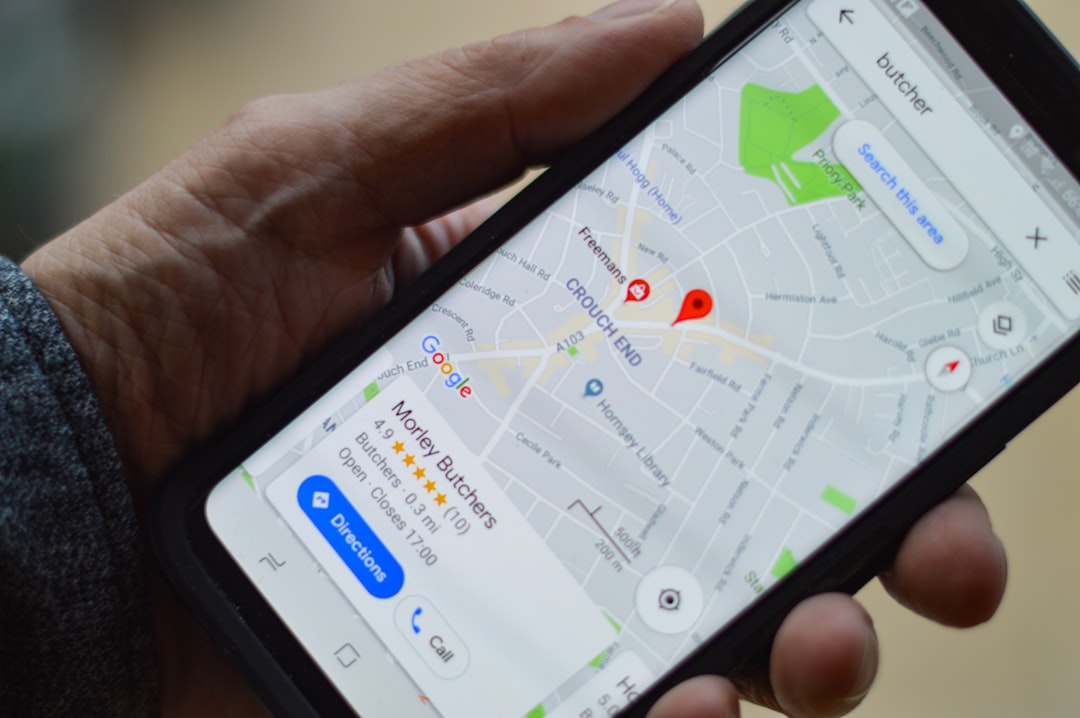
If you have premises open to the public, the address should be complete and verifiable. It should include the information customers need to arrive without difficulty: street, number, floor, unit or premises, postcode and city. It is also important for the map to be correctly positioned and for the pin not to point to an approximate area.
If you provide services at customers' homes or work from a private location, the strategy changes. In these cases, it may be more appropriate to set up a service area and not publicly display an address that does not receive customers. The decision depends on how the business actually operates.
Phone: one main, stable number
The published telephone number should be the one that actually handles commercial enquiries. Changing it constantly, publishing old extensions or using different numbers for each directory can create inconsistencies.
If you use call measurement tools, they should be configured carefully. Tracking is useful for marketing, but it should not disrupt the consistency of the main telephone number on key platforms. For many businesses, the solution is to retain a stable main number and use additional numbers only where the platform allows this without replacing the main contact number.
URL: the main source of authority
The official URL should point to the page that is most useful for the user. For businesses with a single location, this will usually be the homepage or contact page. For businesses with several locations, ideally each local listing should point to its own location page: for example, one page for Barcelona, another for Madrid and another for Valencia.
This page should include that location's NAP, local content, map, opening hours, services, photos and LocalBusiness schema. This prevents all locations from competing with each other using the same generic information.
Common NAP errors that harm local SEO
Most NAP issues do not stem from major technical failures, but from small changes accumulated over years. Someone created a directory listing with an old telephone number, someone else changed the address on Facebook, a previous agency created a landing page using another format, and Google ends up finding different versions of the same business.
Using several versions of the trading name
This is very common in businesses with a legal name and a trading name. For example, a company may be called “Servicios Integrales López SL” but operate as “López Reformas”. If some platforms use the legal name and others the trading name, the entity becomes diluted. The solution is to define which name will be used as the main public name and reserve the legal name for pages where it is needed: legal notices, invoices, contracts or company documentation.
Moving office and leaving old traces behind
A poorly managed move can have an impact for months. Google, directories and users continue to find the old address, reviews associated with another location appear, and some customers arrive at premises where you are no longer based. When a business changes address, it should update its website, Google Business Profile, maps, social media, priority directories, schema, email signatures, advertising campaigns and any indexed local landing pages.
Publishing different phone numbers across different channels
Many businesses have one telephone number for sales, another for administration, another mobile number for WhatsApp and another for campaigns. This is not a problem if it is organised properly, but it is when every platform shows a different main number. The recommendation is to define a main SEO telephone number and use it consistently.
Creating duplicate Google Business Profile listings
Duplicate listings can appear when a business moves, changes name, works with different agencies or tries to rank for several keywords using different listings. The result is usually scattered reviews, confusion and a risk of suspension. Each real location should have its own listing, but there is no reason to create several listings for the same office simply to target different services.
Not clearly differentiating multiple locations
When a business has several locations, each one needs its own NAP. It is not enough to publish the same central address in every directory or use the same local telephone number for locations that actually serve different cities.
- One Google Business Profile listing per real location.
- One specific local page for each branch.
- A unique NAP for each location.
- LocalBusiness schema tailored to each branch.
- Consistent local directories and citations for each city.
How to optimise NAP step by step
Optimising NAP is a straightforward process when done methodically. It is not about editing information at random, but about creating an official version, auditing the platforms where the business appears and correcting them in order of impact.
1. Create a master local identity document
The first step is to create a master document containing the business's official information. It can be a simple spreadsheet, but it must be the single reference point for anyone updating profiles or directories.
- Exact trading name.
- Legal name, where it needs to appear in specific documents.
- Full official address.
- Main telephone number.
- Permitted secondary telephone numbers.
- Canonical URL.
- Official opening hours.
- Main Google Business Profile category.
- Short business description.
- Service areas, where applicable.
2. Review the website: footer, contact and local pages
The website should be the clearest source of information about your company. NAP should appear on the contact page and, where appropriate, also in the footer. If you have location pages, each should show the specific information for that branch. It is also worth checking that there are no old indexed pages displaying a previous address.
3. Align Google Business Profile with the website
Your Google listing should match the master document and the website. Pay particular attention to the business's real name, address or service area, main telephone number, URL, primary category, opening hours, services and description. You should also check whether any duplicate or old listings exist.
4. Audit directories and local citations
After the website and Google Business Profile, it is time to address directories. Not all are equally important, so prioritise main maps and profiles, general directories, sector-specific directories, social media and old mentions that still appear in Google.
| Platform type | Examples | Priority | What to review |
|---|---|---|---|
| Maps and main profiles | Google Maps, Apple Maps, Bing Places | Very high | Name, address, telephone number, URL, opening hours and category. |
| General directories | Páginas Amarillas, Yelp, business directories | Medium-high | NAP consistency and links to the correct website. |
| Sector-specific directories | Doctoralia, Habitissimo, Idealista, Tripadvisor depending on the sector | High if relevant | Speciality, location, telephone number, reviews and services. |
| Social media | Facebook, Instagram, LinkedIn, X | Medium | Name, URL, telephone number, address and contact links. |
5. Implement LocalBusiness schema
Structured data markup helps search engines explicitly understand your business information. For local SEO, the most common schema is LocalBusiness or a specific subtype: Restaurant, MedicalBusiness, LegalService, RealEstateAgent or another depending on the business activity.
This markup should include the name, address, telephone number, URL, opening hours, service area and, where applicable, coordinates, social media and services. The important thing is that the schema matches what users see on the page.
6. Monitor external changes and updates
NAP work does not end on the day you correct it. Google and other platforms may update information based on external sources, user suggestions or aggregated data. This is why it is worth periodically reviewing how your business appears. A quarterly audit is sufficient for many small and medium-sized businesses; for businesses with several locations or franchises, the review should be monthly.
NAP and Google Business Profile: critical points
Google Business Profile is one of the most important assets in local SEO. Therefore, any inconsistency in the listing can have a greater impact than an inconsistency in a secondary directory.
At Ventia Group, we audit your local presence and ensure that your name, address and telephone number are fully aligned across all directories. Take the first step towards strong local SEO.
The name must be the real name
The listing should use the business's real name, without adding services, cities or sales claims that are not part of the official name. Excessive keywords in the name may seem tempting, but it is a risky and unsustainable practice.
The address must reflect the business reality
If you serve customers in an office, shop or commercial premises, the address should be visible and correctly located. If you provide services at the customer's home and do not receive visitors at your base, it may be better to operate as a service-area business.
This distinction is important for locksmiths, plumbers, renovation firms, home services, cleaning services, technical support or professionals working from home. Displaying a private address or one that is not suitable for serving the public can create verification issues.
The category complements NAP
The category is not part of NAP, but it affects which searches Google understands to be relevant to your business. A listing with perfect information but the wrong category may appear for unhelpful searches or fail to appear for important ones.
Reviews strengthen the local entity
Reviews do not replace NAP, but they complement it. A listing with consistent NAP, correct categories, genuine reviews and thoughtful responses creates a stronger local entity. In addition, when users mention services, neighbourhoods or real experiences, they provide useful semantic context for understanding the business.
Checklist for auditing your company's NAP
| Review | Key question | Ideal status |
|---|---|---|
| Name | Does it appear the same on the website, Google, social media and directories? | One single official version. |
| Address | Is the address complete and does it match across all channels? | Same format, postcode and city. |
| Phone | Is there a stable main telephone number? | Same number on the website and Google listing. |
| URL | Do all profiles link to the correct URL? | Canonical URL without unnecessary variations. |
| Google Business Profile | Is the listing verified, complete and free from duplicates? | One listing per real location. |
| Directories | Do the main directories show correct information? | Consistent information in relevant sources. |
| Schema | Does the website include LocalBusiness or an appropriate subtype? | Structured data matching the page. |
How Ventia Group approaches NAP and local SEO audits
A professional NAP audit is not just about checking whether a telephone number is written correctly. At Ventia Group, we review the business's complete local identity and connect it with an SEO strategy aimed at acquiring real customers.
Local presence diagnosis
We analyse how the business appears on Google, Maps, social media, directories and organic results. We look for inconsistencies in name, address, telephone number, URL, opening hours and categories.
Correction of priority information
Not all errors have the same impact. We prioritise the most important channels: the website, Google Business Profile, Apple Maps, Bing Places, sector-specific directories and platforms that appear in the top results when searching for the brand.
Optimisation of local pages
When a business competes in one city or has several locations, we create or improve local pages with useful content, visible NAP, map, services, FAQs, schema and calls to action.
Technical implementation
We review LocalBusiness schema, internal linking, URL consistency, indexing, crawling and local signals within the website. A well-configured listing loses strength if the website does not support it.
Ongoing monitoring and improvement
Local SEO requires control. We monitor rankings, calls, clicks, direction requests, forms and listing performance. This enables us to distinguish between technical changes, visibility improvements and commercial opportunities.
Conclusion: NAP is small, but its local impact is huge
NAP may seem like a basic concept, but in local SEO, basic concepts are often the ones that cost the most money when handled poorly. Name, address, telephone number and URL are the details that underpin your company's digital identity. If they fail, everything else becomes less stable.
Optimising NAP does not mean chasing a magic formula. It means removing noise, organising your local presence and making it easier for Google and users to understand your business without contradictions. It is a foundational action that builds trust, reduces friction and enables the rest of your SEO strategy to make more sense.
If your business wants to appear more prominently in local searches, the first step is not always writing more articles or opening more profiles. Sometimes, the first step is reviewing whether Google correctly understands who you are, where you are and how a customer can contact you.
Ventia Group, a local SEO agency in Barcelona for businesses across Spain
Ventia Group is a Barcelona-based SEO agency specialising in web positioning, local SEO and organic customer acquisition strategies for businesses that want to turn searches into real business opportunities. We work on technical audits, keyword strategy, content, on-page optimisation, Google Business Profile, local SEO, internal linking, consultancy and continuous improvement.
If you want your business to appear when customers search for your services on Google, your local listing to be properly optimised and your information to be aligned across all relevant channels, Ventia Group can help. Contact us and we will review your local presence to identify opportunities for improvement.
Frequently asked questions about NAP in local SEO
Local SEO starts with the details many businesses overlook. If you want to appear ahead of your competitors in searches in your area, let’s talk and design a tailored strategy together.